Abaya design
Design the abaya, see it worn.
From a sketch or a reference photo, Tarzi renders the abaya as a finished image — cut, fabric, embroidery and colour as you describe them — then shows it worn on a model and presents it as a short film. Made for designers and ateliers in the Gulf, in Arabic or English.


What you get
Cut and fall from your sketch
Open front or closed, bisht sleeves, a kimono line, a defined waist: the sketch sets the architecture and the description sets crepe, linen, satin or nida.
Embroidery, trims and colourways by area
Mark the cuff or the hem and describe the embroidery; try black, then camel, then grey, without redrawing. Every version is kept.
Worn, with the coverage you specify
Describe the hijab or shayla, the sleeve length and the setting. Fix any detail — a stray hairline, a shortened sleeve — with an area edit.
How it works
Start from a sketch or a photo
Your own drawing, or a photo of an existing abaya you want to rework.
Describe fabric, trims and colour
In Arabic if you prefer: the fabric, the embroidery, the closure, the occasion.
Generate and refine by area
The image usually arrives within a minute or two. Mark the cuff, the hem or the shayla and describe the change.
Show it worn and in motion
On a model, as six frames, as a five- or ten-second film with sound — downloaded as originals.
Examples from the studio
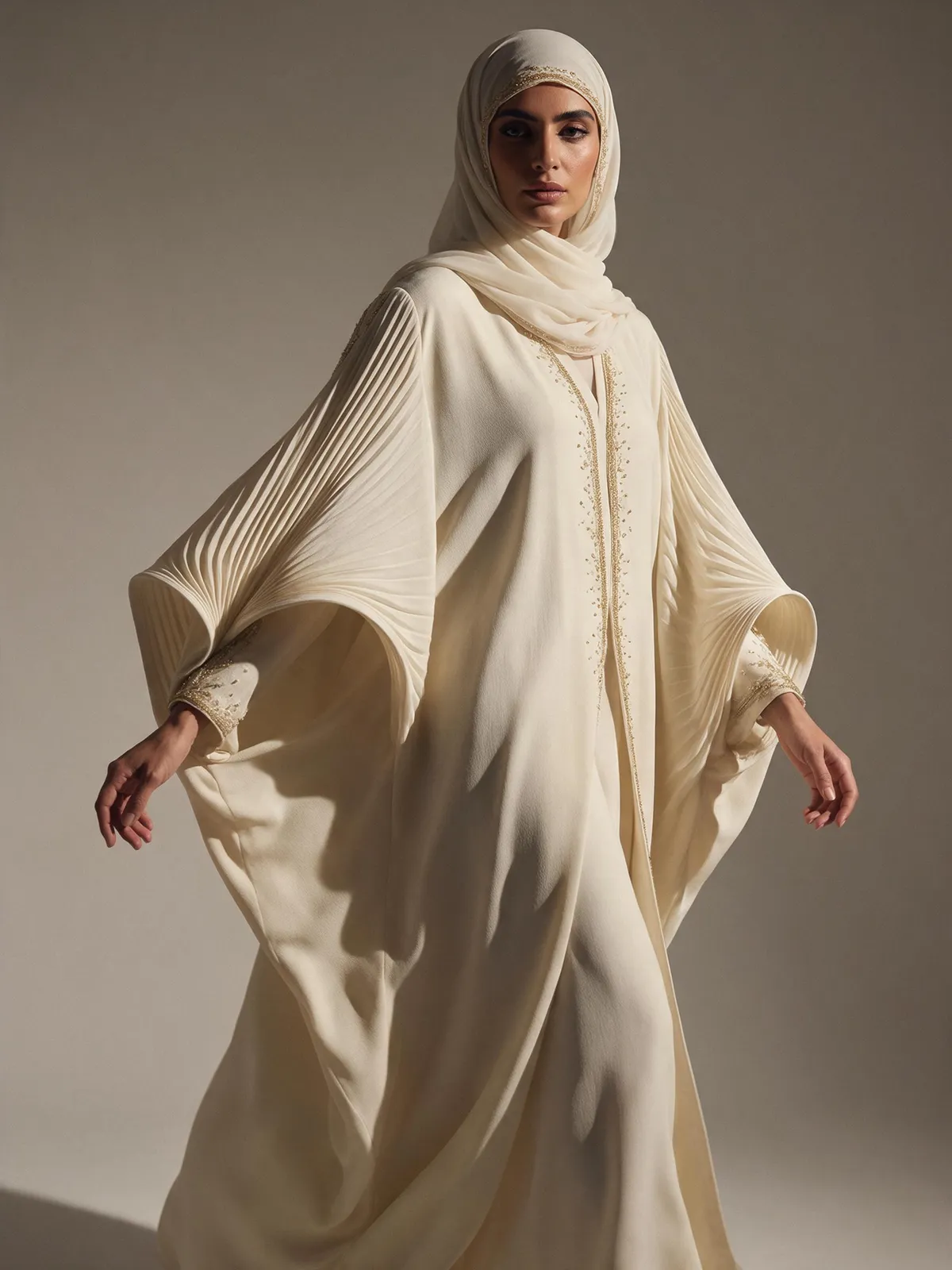
A sculptural evening abaya with a matching shayla 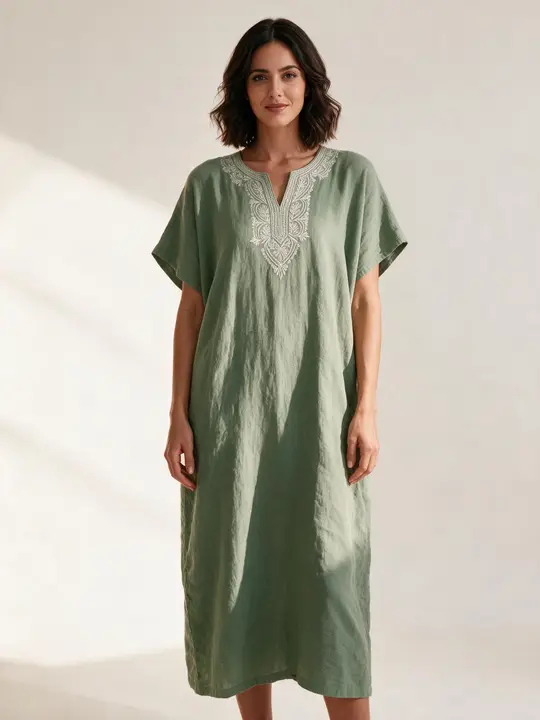
A sage kaftan framed from a phone photo


Every picture on this page is Tarzi output made for the showcase, not customer work. Your own results depend on your references and your description.
What to expect
Tarzi uses generative AI. The image shows how the abaya could look; the fall of the real fabric is decided in the atelier.
Coverage is a description, not a setting: say exactly what should be covered and check the result. The usual correction is a hairline at the shayla, which an area edit removes.
Your designs are private to your account, never used as examples, and yours to download or delete at any time.
Questions people ask
- Can I write the description in Arabic?
- Yes. Descriptions can be written in Arabic, and the whole studio is available in Arabic.
- Does it keep the embroidery pattern from my reference?
- The reference guides placement and character; a specific motif is approximated rather than copied stitch for stitch. For an exact pattern, agree the design in the image and add the real embroidery in the atelier.
- Can I show a client the abaya on herself?
- Yes, by adding her photo as the model reference, with her agreement. The design image stays the authority for the garment.
- Is the work private?
- Yes. Designs are private to your account and never used as public examples; you can delete them at any time.
Related pages
Try it on a design of your own
Open the studio, start from a sentence, a sketch or a photo, and judge the result on your own work. Credits are bought once and spent per piece; nothing renews.