For ateliers and couture houses
Show her the dress before the first cut.
Evening wear, bridal and bespoke work begin with a conversation and a sketch. Tarzi turns that sketch into a finished image during the consultation, tries colours, fabrics and details on request, puts the dress on a model and gives you a short film the client can share — before any fabric is cut.


What you get
Decisions in the first meeting
Render the sketch while the client is with you, change the neckline or the sleeve on the spot, and leave the meeting with an agreed picture instead of a guess.
Fabric and colour options without samples
Edit one area at a time: the same dress in ivory and in champagne, with and without the cape, with a longer train. Every version is kept; nothing is overwritten.
A presentation she can forward
Show the dress worn — with or without a photo of the client herself as the model — then a six-frame photoshoot and a five- or ten-second film with sound, as files you download and send.
How it works
Photograph the sketch or the toile
A phone photo is enough. A swatch photo can go in as a second reference for the fabric.
Describe the fabric and the finish
Mikado or crepe, beading or plain, train length, sleeve — in Arabic or English.
Try the alternatives
Mark the area and describe the option. Each try is a new image next to the previous ones.
Send the presentation
On a model, six frames, a short film with sound — downloaded as originals and sent from your own phone or e-mail.
Examples from the studio
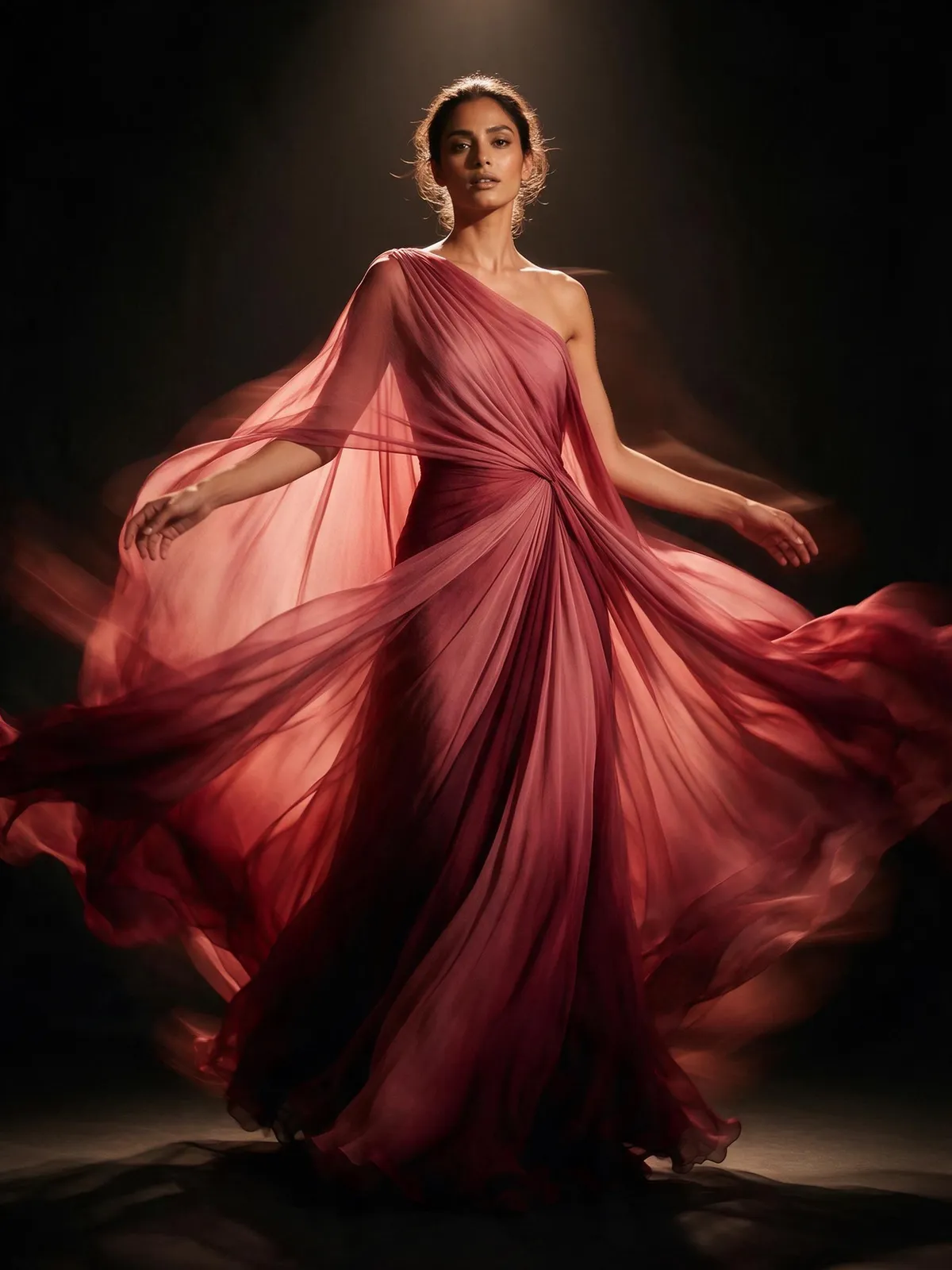
A draped evening gown rendered from a description 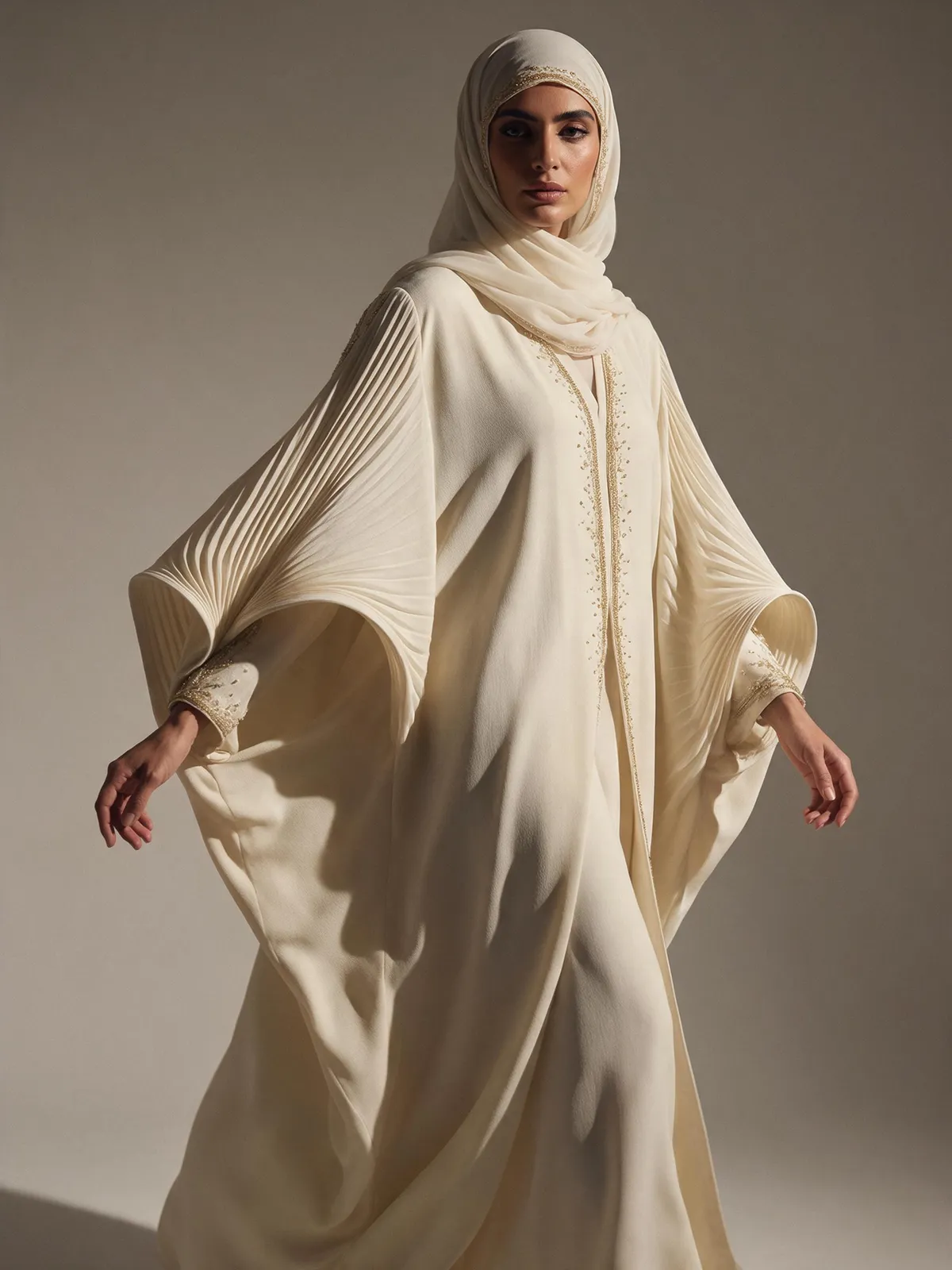
A sculptural evening abaya with its shayla 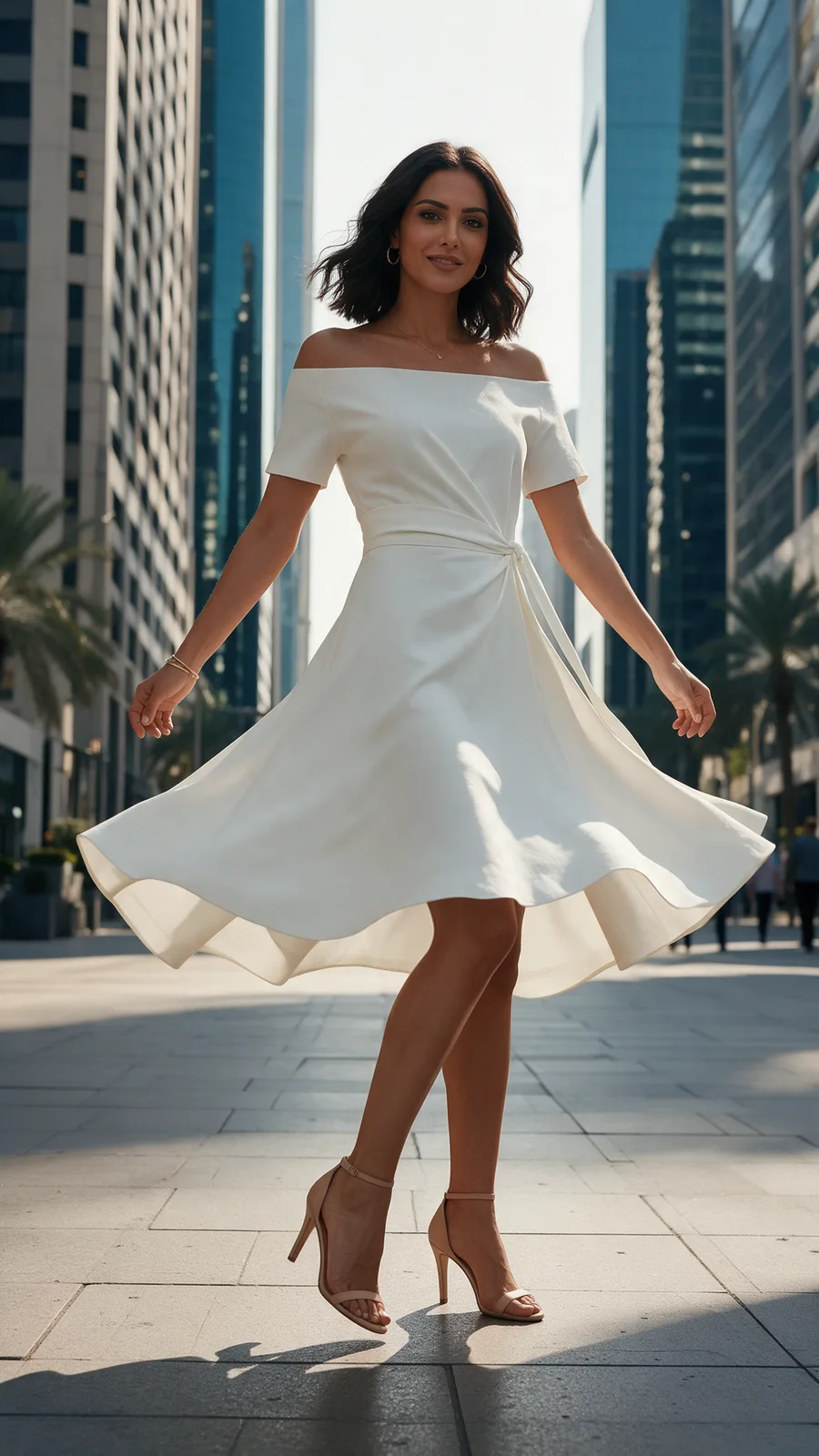
The hem in movement, from a six-frame photoshoot


Every picture on this page is Tarzi output made for the showcase, not customer work. Your own results depend on your references and your description.
What to expect
Tarzi uses generative AI. The image shows how the dress could look; the fitting still decides how it falls.
Delicate construction — boning, pleat counts, embroidery density — is approximated, not engineered. Use the picture to agree a direction, not as a technical drawing.
Clients' work is private to your account and never shown by Tarzi. References you upload must be yours to use; ask the client before using her photo as the model.
Questions people ask
- Can the client see herself wearing the design?
- Yes, when you add a photo of her as the model reference: the design image stays the authority for the garment and her photo for the person. Use it only with her agreement.
- Does it handle hijab, abaya and modest evening wear?
- Yes. Describe the coverage you want — hijab, shayla, long sleeves, a high neckline — as part of the design, check the result, and correct any detail with an area edit. The abaya page shows examples.
- Can I work in Arabic?
- Yes. The studio is available in Arabic and descriptions can be written in Arabic.
- How is it paid?
- Credits, bought once in packs and spent per image, photoshoot or film. There is no subscription, and a generation that fails returns its credits automatically.
Related pages
Try it on a design of your own
Open the studio, start from a sentence, a sketch or a photo, and judge the result on your own work. Credits are bought once and spent per piece; nothing renews.